
Ninh Binh is best known for goat meat and cơm cháy, a crisp rice speciality, but those two dishes are only the beginning of eating well here.
You’ll also find northern Vietnamese noodle soups, rice meals, grilled meat, freshwater fish, cafés and an increasing range of international food around Tam Coc and the main visitor areas.
The most useful approach is to try the regional dishes that genuinely appeal to you, learn what may be hidden in a broth or sauce, and leave room for a familiar meal when you want one.
Start with goat and cơm cháy
Mountain goat, written as dê núi, is the food most closely associated with Ninh Binh.
It appears in many forms, so ordering goat isn’t one decision so much as choosing how adventurous and how hungry you feel.
Dê tái chanh is one of the best-known preparations and is commonly eaten with fig leaves and a dipping sauce.
The word tái is important because it can indicate meat that is rare or only lightly cooked, depending on the dish and the kitchen.
Travellers who prefer thoroughly cooked meat can look instead for grilled goat, goat stir-fried with lemongrass and chilli, goat curry, goat porridge or a hotpot preparation.
Ask how the meat is cooked before ordering if the menu translation isn’t clear.
Cơm cháy is the other essential Ninh Binh speciality.
Rice is cooked, dried and fried until crisp, producing pieces that should be crunchy without feeling hard or burnt.
It may arrive as a packaged snack or at the table with a savoury sauce, sometimes containing meat or offal.
That difference matters if you’re vegetarian or simply expecting plain crisp rice, so check what accompanies it rather than relying on the name alone.
The Ninh Binh provincial information service gives a useful overview of regional Ninh Binh specialities, including the many ways goat and cơm cháy are served.
Look beyond the two famous dishes
Miến lươn is a glass noodle dish with eel, often served in broth made from eel bones and accompanied by shredded banana blossom.
It is a good example of a local dish that feels less ceremonial than a large goat meal and can fit naturally into breakfast or lunch.
Bánh đa cá rô combines broad noodles with perch and greens.
You may also encounter fish from the wetlands around Vân Long, although the species and preparation vary, making the Vietnamese name on the menu more useful than a loose English translation.
Bún mọc Kim Sơn is a noodle soup with pork meatballs and herbs.
Recipes vary, and the meatballs may include wood ear mushrooms, shiitake, pork cartilage or egg yolk.
Another local product is mắm tép Gia Viễn, a fermented shrimp paste with a strong savoury character.
It can be used in cooked dishes or as a condiment, and a small amount carries plenty of flavour.
More unusual regional foods include gỏi cá nhệch, a fish salad eaten with leaves, herbs and a seasoned sauce, and nem chua Yên Mạc, a cured pork speciality.
Neither is the place to make assumptions about cooking or fermentation, particularly for pregnant travellers, young children, older people, or anyone with a weakened immune system.
Everyday Vietnamese food is often the easiest entry point
You don’t need to pursue a regional speciality at every meal.
Phở, bún and miến describe different kinds of noodles, and the words that follow usually tell you more about the protein or preparation.
Bò means beef, gà means chicken, lợn or heo means pork, cá means fish, and tôm means shrimp.
Cơm means rice, while cơm rang is fried rice and cơm phần generally refers to a composed rice meal.
A busy noodle shop with a short menu can be easier to understand than a large tourist restaurant offering dozens of unrelated dishes.
Watch what is being prepared, point to a dish if pronunciation becomes a barrier, and confirm the protein rather than assuming an English menu has captured every ingredient.
Vegetarian eating needs a little explanation
The word chay identifies vegetarian food in Vietnam and is the clearest term to look for on signs and menus.
A plate that appears to contain only vegetables may still use fish sauce, shrimp paste, meat stock or pork fat.
Tôi ăn chay means that you eat vegetarian food, while không thịt, không cá, không nước mắm asks for no meat, no fish and no fish sauce.
Those words still don’t confirm vegan preparation or guard against shared equipment, so explain the requirement rather than treating one phrase as a complete dietary guarantee.
For allergies, a translated note on your phone is usually clearer than relying on the English name of an ingredient.
Show it before ordering and ask the kitchen to confirm both the ingredients and preparation.
Choose where to eat by the kind of meal
Tam Coc has a dense concentration of traveller-oriented restaurants and cafés, making it convenient when a group wants Vietnamese and international choices within the same area.
Outside the busiest visitor areas, English translations may be less common, so saving the Vietnamese name of a dish can make ordering easier.
Restaurants near major sights often make ordering easier, but convenience and translation don’t tell you how well a particular kitchen handles its food.
A short, focused menu and steady turnover can be more informative than a large sign or a long list of cuisines.
Regional goat meals often suit several people because ordering more than one preparation lets the table compare textures and flavours.
Noodle soup, rice plates and bánh mì work better when you need an uncomplicated meal between activities.
If you’re staying near the Tam Coc boat station, this guide to restaurants near Tam Coc boat tour pier explains the immediate dining area in more detail.
Take a break when your appetite asks for one
Trying local food isn’t a test of endurance.
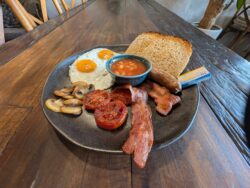
After several rich meals or unfamiliar flavours, you may want eggs and toast, soup, salad, pasta or a simple rice bowl whose ingredients are easy to recognise.
Cantine Tam Coc Italian Kitchen is one option on Tam Coc Road for that kind of pause.
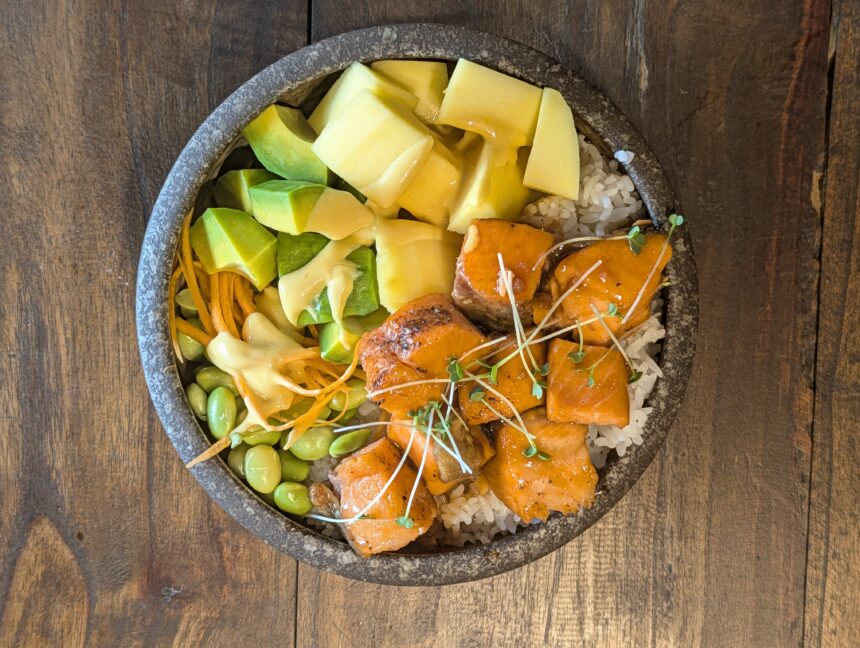
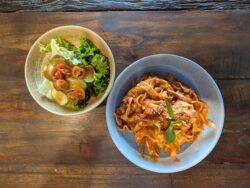
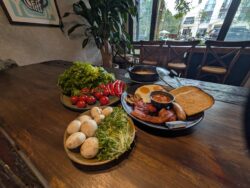
Its current menu includes all-day breakfast, fresh soups with homemade toast, salads, rice bowls, smoothie bowls and fresh tagliatelle made in the restaurant.
This range is relevant for mixed groups because one table can accommodate a light lunch, a cooked breakfast and Italian cuisine without everyone ordering the same style of food.
You can check the current Cantine menu before setting out, since availability can change.
Eat confidently without becoming anxious
No visual test can guarantee that food is safe, but a few choices reduce avoidable risk.
Food cooked thoroughly and served hot is generally a safer choice than raw or undercooked meat, fish, shellfish or eggs.
Be more cautious with uncooked vegetables and fruit you can’t peel when you don’t know how they were washed.
The CDC advises travellers not to drink tap water in Vietnam and to use factory-sealed bottled water or adequately disinfected water when safety is uncertain.
Ice deserves the same question because its safety depends on the water used to make it.
The full CDC food and water guidance for travellers explains these precautions and the additional care needed by higher-risk travellers.
Good judgement shouldn’t prevent you from eating locally.
Choose a kitchen that is actively cooking, order food suited to your own health needs, and ask when you don’t understand a preparation.
A simple way to plan your meals
Give one shared meal to Ninh Binh’s goat dishes and order cơm cháy alongside them if the table wants the two best-known local foods together.
Use breakfast or lunch for an everyday noodle dish, then leave another meal open for whatever you notice while cycling, walking or returning from an attraction.
If a local name interests you, photograph it or save the Vietnamese spelling before heading out.
That small step makes it much easier to find the intended dish and avoids the confusion created by inconsistent English translations.
The aim isn’t to complete a checklist.
It is to understand what you’re ordering, try a few foods that belong to Ninh Binh, and enjoy enough variety that every meal still feels welcome.